
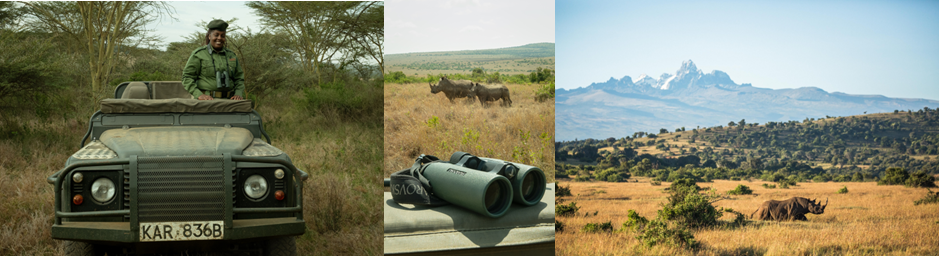
31 July 2025 – Today, on World Ranger Day on 31 July 2025, SWAROVSKI OPTIK is celebrating the courageous men and women on the frontlines of conservation. SWAROVSKI OPTIK, a long-standing partner in conservation efforts, has joined with Borana Conservancy in Kenya to offer a unique insight into the daily life of three rangers, highlighting the essential tools and unwavering dedication that drive their success.
Borana Conservancy, nestled in the stunning landscape of Laikipia, Kenya, covers 32,000 acres of pristine wilderness and is home to an extraordinary array of wildlife, including the critically endangered black rhino. Borana is committed to the sustainable conservation and regeneration of wildlife and rangelands along with building local livelihoods across the landscape. At the heart of Borana’s operations are the rangers: dedicated individuals who work tirelessly to protect The Conservancy’s landscapes and numerous endangered species each and every day.
In 2019 Borana employed 13 female rangers to work in the fencing patrol and maintenance teams, operating gates and managing the central operations room. “Borana’s female rangers have shown that female rangers can do what men do, even better” – Rianto Lokoran.
The workday for a ranger begins promptly at 6:00am with a check-in from the Operations Room. This initial communication obtains an update on all General Security personnel while also identifying any issues that may have arisen overnight, including security concerns or potential threats.
By 6:30am, rangers are on the move. Each team sets out to patrol its designated zone, monitoring wildlife activity with a particular focus on Black and White Rhino, and reporting. These patrols are crucial in maintaining real-time awareness of animal locations and ensuring the safety of all the species on the conservancy.
Patrols continue until approximately 1:00pm after which teams return to their camps or outposts for lunch. However, this break is brief, as rangers are soon redeployed for afternoon duties, focusing on areas not yet covered to ensure comprehensive surveillance across the Borana.
Fence-line patrols also form a key part of some ranger’s activities. They are responsible for clearing encroaching vegetation, repairing broken wires, and replacing any posts damaged by wildlife—particularly elephants. These efforts are essential to maintaining secure boundaries and preventing any human-wildlife conflict. Additionally, rangers remain alert for signs of unusual activity, such as unidentified footprints or disturbances that may indicate potential poaching or intrusion.
Another critical duty is managing access to the Conservancy. A dedicated group of rangers are stationed at the main gates to monitor the movement of all vehicles and individuals, ensuring that entry and exits are strictly controlled. This function not only enhances security but also reinforces the accountability necessary in a protected area.
The role of a ranger at Borana Conservancy is both demanding and deeply purposeful. These dedicated men and women are the backbone of the Conservancy’s conservation efforts, working tirelessly from dawn to dusk to ensure that both wildlife and people can thrive in harmony.
William Kiupe:
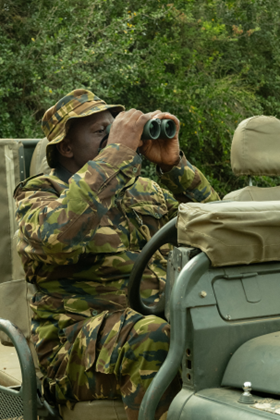
Kuipe leads the National Police Reservists (NPR), a critical unit in Borana’s security structure. These men are the highly trained armed rangers who are employed by Borana Conservancy under a government mandate to protect endangered species. Kiupe is responsible for their deployment during incidents of illegal activity, ensuring they are well-equipped, well-trained, and prepared to respond swiftly and effectively. Beyond field operations, Kuipe contributes to security planning and decision-making at a senior level. He works closely with Rianto, to coordinate efforts across the Conservancy and in the event of any security breach, Kuipe serves as the key contact with the Kenya Police, ensuring timely coordination and adherence to national law enforcement procedures. Kuipe’s leadership combines operational expertise with a deep commitment to community and conservation. Under his guidance, Borana remains a model of effective, integrated security—where wildlife protection and local collaboration go hand in hand.
Riantos Lokoran:
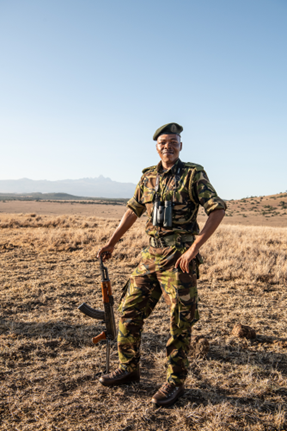
Rianto is responsible for the day-to-day management of the general security teams across Borana. A critical part of his role involves ensuring that rhino sightings and movements are reported daily—an essential task in monitoring and safeguarding this species. Rianto also oversees the fence line teams, ensuring that each patrol is correctly recorded and that all entry and exit points are tightly controlled. When veterinary assistance is needed, Rianto coordinates directly with Kenya Wildlife Service veterinary unit and wildlife officers, helping to ensure timely medical intervention if and when it is needed. Rianto is also responsible for the training and welfare. His guidance helps shape a professional, motivated team capable of meeting the challenges of modern conservation.
Elizabeth Kimaru:
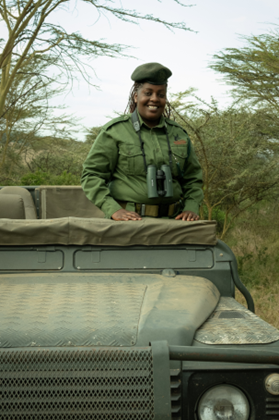
Elizabeth joined the Borana Conservancy Security team in 2019 as a part of the fencing patrol team, playing a vital role in safeguarding the integrity of the Conservancy’s perimeter. She later served as a Gate Keeper before stepping into her current position as a Radio Operator based in Borana’s operations control centre. Through a scholarship, Elizabeth has since expanded her qualifications and is currently pursuing a Diploma in Security Management & Forensic Science. As a Radio Operator, Elizabeth is the crucial link in Borana’s field communications. She is responsible for receiving and relaying all incoming reports, coordinating security responses, logging wildlife sightings, and ensuring regular check-ins from Rangers on patrol. Her work often includes late-night shifts, during which she mobilises response units and monitors ongoing operations. Elizabeth is proud to be one of the few women working in frontline security. “We’ve proven that women can handle roles once considered too tough or too physical,” she says.
For more details on Borana Conservancy, visit https://www.boranaconservancy.com/.
The world belongs to those who can see beauty.
Experience the moment!
SEE THE UNSEEN.
www.swarovskioptik.com
Notes to Editors:
Image Captions (left to right):
- Ranger Elizabeth Kimaru on the Borana Conservancy. Photographer Finley Dennison.
- Borana Conservancy is home to an extraordinary array of wildlife, including the critically endangered black rhino. Photographer Finley Dennison.
- Borana Conservancy, nestled in the stunning landscape of Laikipia, Kenya, covers 32,000 acres of pristine wilderness and is home to an extraordinary array of wildlife, including the critically endangered black rhino. Photographer Shaun Mousley.
Selection of high-res images are available to download from https://www.dropbox.com/scl/fo/uv6oesr5x7mvjyqzz477b/AEmtAKIqoHIm3Jjb4NZkp6k?rlkey=97mya18z3pwhsvdmc419ee7vd&st=vn4h7121&dl=0.
ABOUT SWAROVSKI OPTIK
SWAROVSKI OPTIK, headquartered in Absam, Tyrol, is part of the Swarovski group of companies. Founded in 1949, the Austrian company specialises in the development and manufacturing of long-range optical instruments of the highest precision in the premium segment of the market. The binoculars, spotting scopes, and optronic instruments are products of choice for demanding users. The company’s success is based on its innovative strength, the quality and intrinsic value of its products, and their functional and aesthetic design. The appreciation of nature is an essential part of its company philosophy and is reflected commendably in its environment-friendly production and its long-term commitment to selected nature conservation projects.
For Media Enquiries, Images and SWAROVSKI OPTIK Product Loan, contact:
Sarah Salord | GEC PR | swarovskioptik@gecpr.co.uk.